

Legal Obligations

Energy Performance Certificate (EPC)
Since 2008, it is compulsory for all properties that are to be rented out to have an energy performance certificate also known as an EPC. All landlords are required by law to obtain and make available a copy of the EPC to prospective tenants.The report gives your property a rating between A and G. “A” Rated properties have the lowest running costs and “G” the highest. The calculation is made using the characteristics of the home which include, but are not limited to: the age of property, heating system, heating controls, insulation, glazing and lighting.
Once the calculation is made you will receive an 8 page report that will outline your score and give recommendations on how your rating can be improved.
The EPC is valid for a period of 10 years.
From April 2018, the Energy Act 2011 will make it unlawful to let residential (or commercial) properties with an EPC rating of F or G. Therefore, owners will be required to upgrade the energy performance of these properties.
Find out whether or not your property has an EPC
If you would like for us to arrange this for you, please do not hesitate to contact us.

Gas Safety Record
If the property has a gas connection it is a legal requirement for the landlord to have an annual Gas Safety Record carried out by a Certified Gas Safe Registered Engineer, according to Gas safety Installation and Use Regulations 1998.The engineer will test that all pipe work, gas appliances and flues in the property are safe. Common appliances in residential properties include boilers, cookers & fires. It usually takes an engineer between 30 and 50 minutes to test and certify appliances in a residential home. Once the appliances have been certified we will ask for a copy of the record.
If you would like for us to arrange this for you, please do not hesitate to contact us.

Deposit Protection Scheme
It is a legal requirement to have your tenants deposit placed in an approved tenancy deposit scheme for all assured shorthold tenancies starting after 6th April 2007. At PK Properties we use the Deposit Protection Service which is fast, fair and secure. DPS allows you to access your online account any time you need to and we can submit deposits within minutes.DPS are not affiliated to any particular trade body and offer an independent free Alternative Dispute Service which aims to resolve disputes quickly without the need for court action. As a tenant, your deposit will be safeguarded throughout the period of your tenancy and the funds will be repaid to the appropriate parties. Just remember, in order to ensure you receive your full deposit at the end of your tenancy you must satisfy the terms of your tenancy agreement, make sure the property is not damaged and pay the rent and bills.
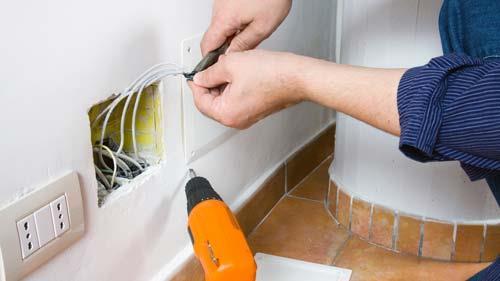
Electrical Safety
There is a requirement under the Electrical Equipment (Safety) Regulations 1994 that covers all electrical goods such as kettles, TVs, fires, fridges, etc. It is recommended that these appliances are tested annually which is often referred to as the Portable Appliance Test (PAT). These regulations also stipulate that all other electrical installations in a let property must be safe. All equipment should be properly insulated and earthed and protected by suitable fuses.Building Regulations Part P (Electrical Safety in Dwellings) 2005, requires most electrical work associated with a property to be carried out by a competent person. This person should be registered with an approved self-certification scheme such as the National Inspection Council for Electrical Installation Contracting (NICEIC).
The plugs and Sockets (Safety) Regulations 1994 requires that any plug, socket or adaptor must meet current and relevant British Standards. Plugs must have correct fuse, approved adaptors must be used on appliances with non-UK plugs.
It is strongly recommended that a Domestic Electrical Installation Condition Report is commissioned every 5 years.
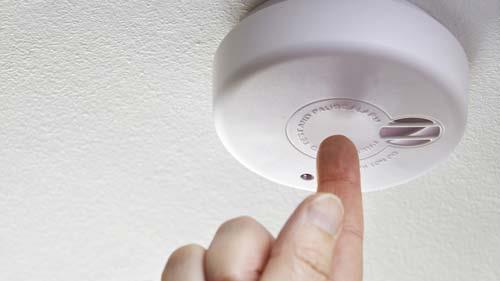
Smoke & Carbon Monoxide Detectors
From 1st October 2015, for all properties it is a legal requirement for the landlord to have a Smoke Detector equipped on each storey of the premises on which there is a room used wholly or partly as living accommodation (a bathroom or lavatory is to be treated as a room used as living accommodation). All properties with open flued boilers/back boilers are also legally required to have a Carbon Monoxide Detector fitted. All alarms & detectors should be tested on the day the tenancy commences.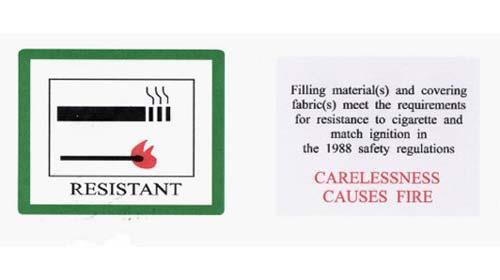
Furniture & Furnishings Regulations
It is a requirement of the Fire & Safety Furnishings Regulations 1988 (Amended 1993) that all beds, headboards, sofas and chairs, covers for furniture, cushions & pillows pass the match test for flame retardancy. They do not apply to carpets, curtains, bed linen or duvets. Each item should be labelled indication compliance.
Overseas Landlords
Even if you do not live in the UK, under the income and Corporation Taxes Act 1998 you are still liable to pay UK tax on the rent that you receive in this country.Under the Finance Act 1995 landlords must apply for an Exemption Certificate, permitting rent to be paid to the landlord without deduction of tax. Only the landlord can make the application, which, if granted, be issued directly to PK Properties (or the tenant if we do not manage the property. Non Resident Landlords (NRL) are persons who have UK rental income and whose “usual place of abode” is outside the UK (6 months or more).
Until an exemption certificate is received PK Properties are legally obliged to withhold tax at the basic rate from the net rental income. Where PK Properties do not collect rent on the Landlords behalf, Landlords have a duty of care to advise their tenants to make this deduction. Where the property is jointly owned by 2 or more landlords, separate approval must be obtained.

Houses in multiple Occupation
Houses in Multiple Occupation are defined as properties where three or more people occupy a property but do not form a single household, usually because they are not related. Depending on the exact type of HMO, some landlords must have a licence from the council. All HMOs, whether a licence is required or not, are subject to Management Regulations and Inspections under the Housing Health and Safety Rating System. In addition to the standard compliance already mentioned, a landlord of an HMO would need to ensure:• Layouts and facilities meet minimum standards (check with the local authority);
• The property is maintained in a safe and habitable condition;
• They are registered with the local authority and keep them informed of the current residents
• Fire extinguishers and alarms are tested and maintained regularly. The exact rules relating to HMOs can vary between areas and therefore advice must be taken from the local authority

Consents To Let
Before letting out your property the following should be considered:- If the property to be let is subject to a mortgage, permission is usually required from your lender.
- If your property is leasehold you will normally require consent from the freeholder too.
- Insurance companies will need to be notified of your intention to let the property.
- All landlords listed on the deeds will need to confirm that they are in agreement to let the property.